
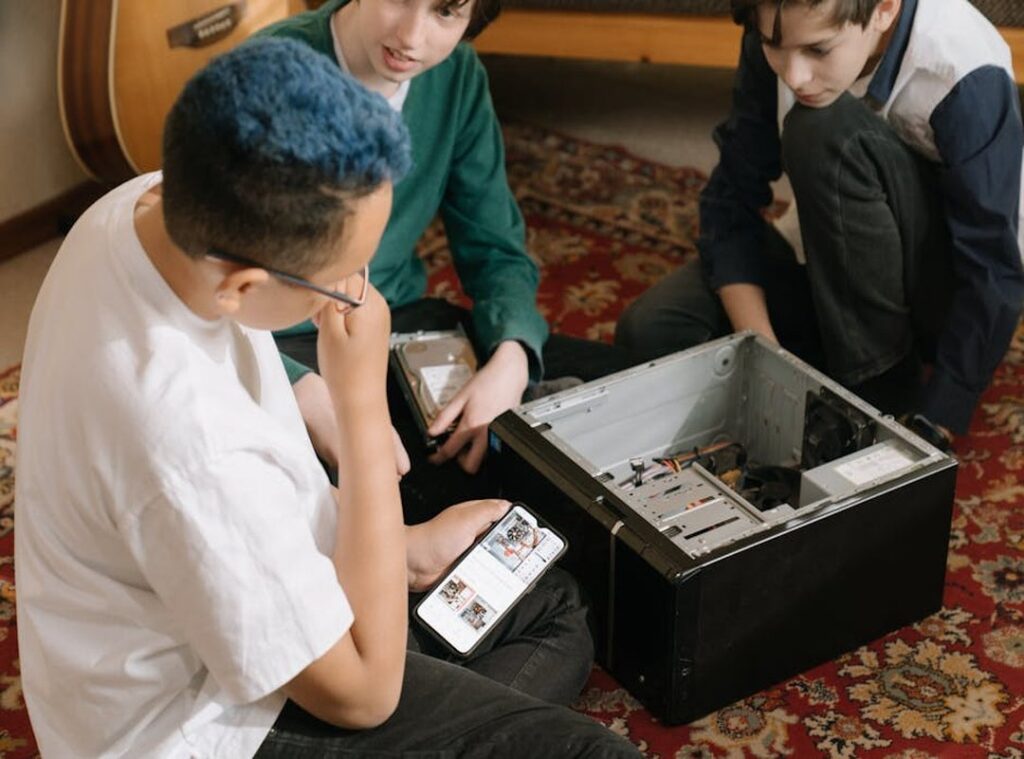
I used to think computer geeks spoke another language.
Turns out they just skip the jargon and get to the point.
This article is about Computer Geeks Dtrgstechfacts (not) as a label, but as a way of thinking.
It’s about real people who love tech enough to explain it clearly.
You’ve clicked because something felt confusing. Maybe a term you heard at work. Maybe a setting on your phone you still don’t touch.
Or maybe you’re tired of feeling like tech is built to keep you out.
Good. That’s why this exists.
The facts here come from watching how real conversations happen online (especially) on places like Dtrgstechfacts. No fluff. No gatekeeping.
Just what works. What sticks. What actually helps.
I don’t believe in “dumbing down” tech. I believe in saying it straight. Like: “This button resets your router.
Not magic. Just electricity and code.”
You’ll walk away understanding more than you did two minutes ago.
And you’ll know where to look next when something else doesn’t make sense.
That’s the promise. No hype. No filler.
Just clarity.
Who Even Uses That Word Anymore?
I call myself a computer geek.
You probably do too. Or you know one.
A computer geek is just someone who gets excited about how tech works. Not because it’s trendy. Because it makes sense to them.
Some people collect stamps. Others rebuild old radios. I once spent three hours figuring out why my coffee maker wouldn’t connect to Wi-Fi.
(It wasn’t the coffee maker.)
“Geek” doesn’t mean awkward. It means focused. Curious.
Willing to dig into the messy parts no one else touches.
You’ll find them building PCs from scratch, patching open-source bugs at 2 a.m., or explaining DNS to their aunt at Thanksgiving. (She asked.)
They don’t hoard knowledge. They share it. Fast, clear, no fluff.
That’s why sites like Dtrgstechfacts exist.
People ask: “Why not just use the manual?”
Because manuals assume you already speak machine. Geeks translate.
Are they obsessed? Sure. Is that bad?
Tell that to the person who fixed your router while eating cereal.
Computer Geeks Dtrgstechfacts isn’t a label. It’s a signal. You see it.
You get it. You click.
Some think geeks only care about specs.
I care about what the spec does for you.
You ever stare at a device and wonder, “What’s really happening right now?”
Yeah. That’s the start of it.
Dtrgstechfacts: Tech Facts That Stick
I use Dtrgstechfacts when I need to actually understand something (not) just skim a headline.
It’s not another blog full of jargon and filler.
They explain RAM like you’re holding it in your hand. Not “RAM is a volatile memory subsystem”. No.
They say *“RAM is your laptop’s short-term memory. Close too many tabs? It fills up.
Your computer slows down.”*
You’ll find how-to guides that work the first time.
Like resetting your router without Googling “why is my Wi-Fi blinking orange?” (it blinks orange because it hates you, by the way).
They cover history too. Like how the internet started as a Pentagon experiment and ended up in your toaster. That kind of context matters.
You stop feeling behind.
Computer Geeks Dtrgstechfacts isn’t for people who already know everything.
It’s for people who’ve nodded along in meetings while secretly wondering what “cloud” even means.
Their stuff sticks because it’s short.
Because it assumes you’re smart. But not trained in tech-speak.
Why does this matter? Because tech changes fast. And waiting for a class or a 45-minute YouTube video means you fall further behind.
Dtrgstechfacts gives you the fact. Then the “so what.”
Then you go fix your printer.
No fluff. No gatekeeping. Just answers you can use before lunch.
Tech Facts That Stick

The first computer mouse was made of wood. I held a replica once. It felt heavy and awkward.
People forget how crude early tech really was.
QWERTY wasn’t built for speed. It was built to stop typewriters from jamming. You ever wonder why your fingers ache on certain keys?
That’s why.
Grace Hopper found a moth stuck in a Harvard computer relay in 1947. She taped it into her logbook and wrote “first actual bug found.”
(Yes, that’s where the term came from. Not a metaphor.)
The Space Shuttle flight software had more lines of code than Windows 95. That still blows my mind. We think modern apps are complex.
But 1980s NASA engineers were debugging rocket math in assembly language.
These facts aren’t trivia. They’re proof that tech isn’t magic. It’s people solving real problems with whatever they’ve got.
Want more like this? Check out Tech Geeks Dtrgstechfacts for straight talk on weird, true tech history.
No jargon. No fluff. Just stuff that makes sense.
Tech Isn’t Magic. It’s Just Stuff You Use.
I used to think tech literacy meant memorizing command lines.
Turns out it just means knowing why your phone won’t send that text.
You don’t need to be a Computer Geeks Dtrgstechfacts to open a bank app without sweating.
Or to spot a phishing email before you click “Reset Password.”
Smartphones? Online banking? News sites full of AI-generated blurbs?
They all assume you know something. If you don’t, you’re guessing. And guessing gets expensive.
Tech skills aren’t just for coders. Your HR rep uses spreadsheets. Your nurse logs data into a tablet.
Your barista runs the whole register on an iPad. No job is untouched.
And when your laptop freezes mid-Zoom call?
Knowing how to restart the Wi-Fi router (not) just yell at it (saves) thirty minutes.
I rebooted my router twice last week. Once because it was broken. Once because I forgot to plug it in.
(True story.)
You don’t need a degree. Just ten minutes a week. A real question.
A wrong answer that leads to a right one.
Stuck on where to start? Try the Guide in programming dtrgstechfacts. It’s plain English.
No jargon. No hype. Just steps.
You Got This
I used to stare at tech terms and feel stupid.
You probably did too.
That confusion? It’s not your fault. It’s bad explanations.
I broke things down because nobody needs jargon to understand how their phone works. Or why a password matters.
Computer Geeks Dtrgstechfacts isn’t some secret club.
It’s just people who asked questions and kept going.
You can do that.
You already are.
The resources I shared? They work because they skip the fluff. They show you what actually happens, not what a textbook thinks you should know.
So what’s next? Go read one thing on Computer Geeks Dtrgstechfacts right now. Just one.
Not to become an expert.
Just to prove to yourself that tech doesn’t have to win.
You’re not behind. You’re not broken. You’re just getting started (and) that’s enough.
Hit that site. Click something. Then come back and tell me what surprised you.
 Gavryth Lornquill is a contributor at FMB Moto Apparel who focuses on motorcycle gadgets, riding accessories, and emerging trends in rider technology. Known for his detailed and informative writing style, he creates engaging content that helps readers discover practical innovations designed to improve the riding experience.