
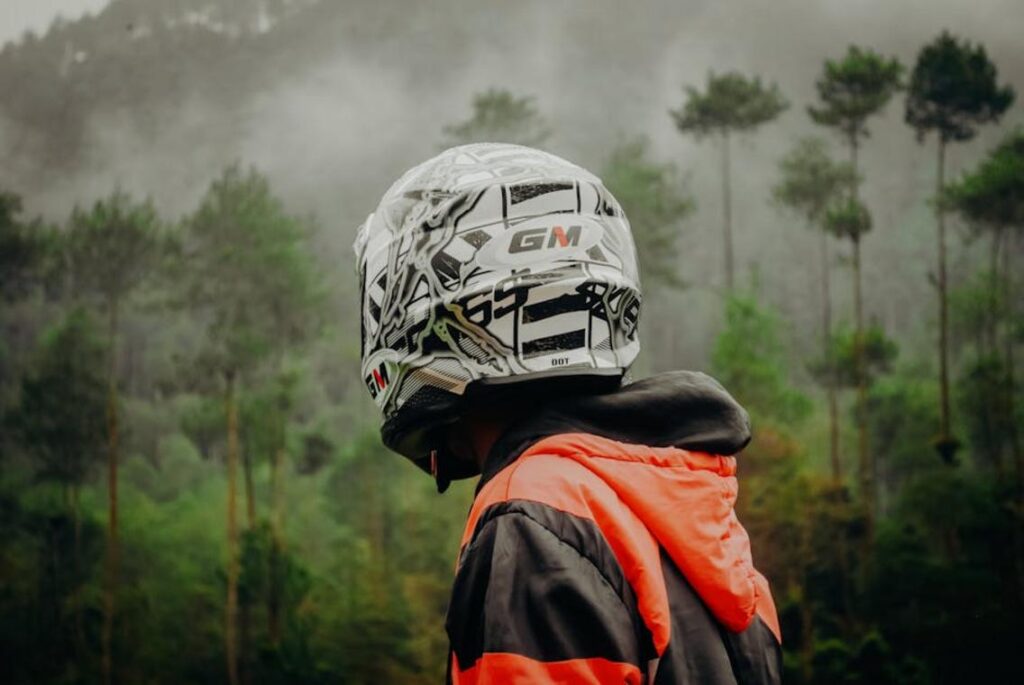
I get asked the same question almost every day: what are moto helmets made of fmbmotoapparel?
Most riders know helmets are supposed to protect them. But when you start seeing terms like polycarbonate, fiberglass, and carbon fiber thrown around, it gets confusing fast.
Here’s the thing: the material in your helmet matters more than you think. It’s not just marketing talk.
I’m going to walk you through exactly what goes into our helmets at FMB Moto Apparel. From the outer shell down to the comfort liner. No jargon you need a PhD to understand.
We’ve spent years testing materials and watching how they perform in real conditions. Not just lab tests. Real riding.
This article breaks down each material we use and why we chose it. You’ll understand what’s actually protecting your head when you’re on the road.
By the end, you’ll know enough to make a smart safety decision. Not based on what sounds cool, but on what actually works.
The Anatomy of a Helmet: Understanding the Core Components
You ever wonder what actually stands between your skull and the pavement?
I’m going to break down the four parts that make up every motorcycle helmet. Because knowing what you’re wearing matters more than most riders think.
The Outer Shell
This is the hard exterior you see. It’s built to spread impact force across a wider surface area instead of letting it concentrate in one spot. It also stops sharp objects from punching through.
Think of it as your first line of defense.
The Impact-Absorbing Liner
Here’s where the real work happens. Most helmets use EPS (Expanded Polystyrene) for this layer. When you hit something, this foam crushes and deforms. That’s not a flaw. That’s the design.
It absorbs energy so your brain doesn’t have to.
The Comfort Liner & Padding
This soft interior touches your head and keeps the helmet snug. It also manages sweat (which you’ll appreciate on long rides). But comfort isn’t just about feeling good. A helmet that doesn’t fit right won’t protect you properly.
The Retention System
Your chin strap and buckle. Simple but critical. The best helmet in the world won’t help if it flies off your head during a crash.
I’ve seen riders at FMB Moto Apparel ask what are moto helmets made of fmbmotoapparel and these four components are the answer. Each one plays a specific role in keeping you safe.
Understanding this stuff helps you make better choices when you’re shopping for gear.
Outer Shell Materials: A Breakdown of FMB’s Choices
Let me be straight with you.
When you’re shopping for a helmet, the outer shell material matters more than most riders realize. But here’s where it gets tricky.
Not every manufacturer agrees on which material is actually best. And honestly? There’s no single right answer.
What works for a track rider isn’t the same as what works for someone commuting through city traffic. Your riding style, your budget, and even your neck strength all play into this decision.
I’m going to walk you through the three main shell materials we use in our motorcycle gear fmbmotoapparel lineup. But I’ll also tell you where the science gets murky and where we’re still learning.
Polycarbonate Alloys
This is what most riders start with.
Polycarbonate is a thermoplastic that handles impacts really well. We use advanced blends in select models because they offer solid protection without emptying your wallet.
It’s heavier than other options. That’s just the reality. But the manufacturing consistency is excellent, which means quality control stays tight across production runs.
Some riders say polycarbonate helmets feel bulky after a few hours. Others never notice. (Your mileage will vary, literally.)
Fiberglass Composite
Here’s where things get interesting.
Fiberglass is a matrix of woven fibers set in resin. It’s lighter than polycarbonate and the strength-to-weight ratio is genuinely impressive.
We hand-lay our proprietary fiberglass composite shells. This lets us control thickness and optimize how energy disperses during an impact.
But I’ll be honest. Hand-laying introduces variables. Two shells from the same batch might have slight differences. We do our best to minimize this, but it’s part of working with composite materials.
Carbon Fiber & Carbon Composite
This is the top tier.
Carbon fiber is strong and exceptionally light. We’re talking about reducing rider fatigue on those long highway stretches where every ounce counts.
Our premium performance helmets use multi-layer carbon fiber weaves. The weight reduction is real and the structural integrity is outstanding.
Here’s what I’m less certain about: whether every rider actually needs carbon fiber. The performance benefits are measurable. But are they noticeable to someone riding 30 minutes a day? Maybe not.
(And yeah, the price jump is significant.)
When people ask what are moto helmets made of fmbmotoapparel uses, I tell them it depends on what you’re trying to accomplish. There’s no one-size-fits-all answer here.
Your head deserves protection. Which material gets you there? That’s between you and your riding reality.
The Impact Liner: The Unsung Hero of Helmet Safety
You probably don’t think much about what’s inside your helmet.
Most riders focus on the shell. The graphics. Maybe the weight or how it fits.
But here’s what actually saves your head in a crash.
The foam liner sitting between your skull and that hard outer shell does all the heavy lifting. Without it, you’re basically wearing a decorative bucket.
What EPS Actually Does
Expanded Polystyrene is what what are moto helmets made of fmbmotoapparel breaks down to at its core. It’s a rigid foam made of tiny beads fused together.
Think of it like bubble wrap, but way more technical.
When you hit something, those beads crush. They compress and absorb the energy that would otherwise go straight into your brain. The foam sacrifices itself so you don’t have to.
That’s why helmets are one-time use after a serious impact. The EPS has already done its job by deforming permanently.
Now, most helmets use single-density EPS. Same hardness throughout the entire liner. It works, but it’s not ideal for every type of crash.
Here’s why that matters.
A low-speed fall needs different protection than a high-speed collision. Single-density foam has to compromise. It can’t be perfect for both scenarios.
Multi-Density EPS Changes the Game
We use strategically placed layers with different densities throughout our helmets.
Softer foam goes in areas that typically see lower-speed impacts. Denser foam protects zones that take harder hits during high-speed crashes.
It’s not complicated. Just smarter engineering.
You get better protection across more crash scenarios instead of adequate protection for one type. That’s the difference between designing for test scores and designing for real-world accidents.
Your helmet should work whether you lowside at 25 mph or hit something at highway speed.
Interior Fabrics & Components: Where Technology Meets Comfort
You probably don’t think much about what’s inside your helmet.
Most riders focus on the shell. The graphics. Maybe the weight.
But here’s what happens when you ignore the interior. You end up with a sweaty mess after 30 minutes. Your skin breaks out. The liner starts to smell like something died in there.
I’ve tested dozens of helmets over the years. The difference between good interior materials and cheap ones? It’s night and day.
Let me break down what actually matters.
Moisture-wicking fabrics are pretty simple. They pull sweat away from your skin instead of letting it sit there. Think of how a paper towel absorbs water and spreads it out. Same concept, just with technical fabrics engineered for your head.
The result? You stay cooler and drier when you ride. Not rocket science, but it makes a real difference on long trips.
Now, antimicrobial liners sound fancy. All it means is the fabric is treated to stop bacteria from growing. Those bacteria are what cause that helmet funk you can’t seem to wash out (and trust me, everyone’s smelled it at some point).
We also use hypoallergenic materials. That just means they won’t irritate your skin or cause reactions. If you’ve ever had an itchy forehead after a ride, you know why this matters.
But fabrics are only part of the story.
The components inside your helmet take a beating. Visor mechanisms get opened and closed hundreds of times. Ventilation sliders get adjusted constantly, usually with gloves on.
Cheap parts fail. They stick. They break.
I select every component based on three things. It needs to last through thousands of uses. It needs to work smoothly with gloves. And it needs to hold up in real riding conditions.
Some people say all this stuff is overkill. They argue that basic foam and fabric work just fine, and spending more on interior tech is wasted money.
Fair point. You can absolutely ride with a basic helmet.
But here’s what they’re missing. Your helmet sits on your head for hours at a time. The interior is what you actually feel. A high-tech shell with a garbage interior is like buying expensive shoes with no insoles.
When you look at what are moto helmets made of fmbmotoapparel, you’ll see that modern helmets are built in layers. Each one serves a purpose.
The interior layer? That’s where comfort lives.
A Commitment to Safety Forged in Advanced Materials
You now understand the materials that matter.
Polycarbonate, fiberglass, carbon fiber, and multi-density EPS. These aren’t just technical terms. They’re the foundation of every helmet we build.
I know the confusion around helmet materials stops riders from making the right choice. You see conflicting information everywhere and it’s hard to know what actually protects you.
That’s why we’re deliberate about material selection for each model. Every helmet gets the right combination of materials for its purpose. Whether you’re working with a tight budget or want the lightest option available, you get a product optimized for safety, weight, and performance.
Here’s what I want you to do: explore our collection and see how these materials work together. Look at what are moto helmets made of fmbmotoapparel and you’ll find detailed specs for each model.
Match the materials to your riding style. Find the helmet that fits your needs.
We’ve done the engineering work so you can ride with confidence. Now it’s time to choose the protection that’s right for your next ride.
 Vynovox Rune is the founder of FMB Moto Apparel, a platform focused on exploring the evolving relationship between motorcycle culture, advanced technology, and modern riding apparel. Passionate about innovation and rider performance, Vynovox created the platform to provide enthusiasts with informative coverage on smart gear, protective equipment, and emerging technologies shaping the future of motorcycling.